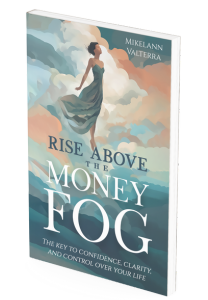
Noble Poverty and Underearning
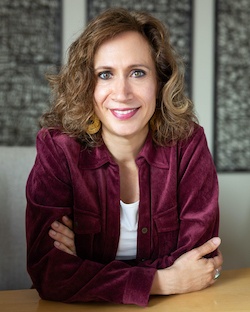
by Mikelann Valterra, MAAre you tired of not making enough money? Or do you suspect you are earning below your potential? If so, you may be “underearning”. Underearning is the pattern of consistently not earning enough money. This column aims to explore many facets of underearning, from the belief systems around it, to what to do about making more. In order to overcome underearning, it is necessary to first pinpoint your own underearning behavior, which we looked at in the first column. But then it is important to understand why we do what we do. It is nearly impossible to take action to bring in more money if we do not explore the beliefs that may be keeping us from making money in the first place. “Noble poverty” is one such belief system that I believe needs to be explored, if one is trying to earn more money. Simply put, underearners fall into noble poverty when they feel that there is some virtue in not having money. People wrapped up in noble poverty tend to believe, unconsciously, that there is something wrong with money, that it is somehow dirty or tainted. Therefore, in order to be a “good” person, one should stay away from, or be above, money. If you believe in noble poverty, or aspects of it, you will probably not allow yourself to earn a lot of money, or you may repel the money that does come into your life. While the internal beliefs of underearners wrapped up in noble poverty can be complicated and laced with contradictory messages, the basic foundation remains constant — underearners have a love/hate relationship with money. They may like the things money can buy or enjoy the freedom money would give them, but because they find something inherently wrong with having money, they shy away from acquiring it. Underearners who live a life of noble poverty often follow the maxim: “It is better to be good and poor, than rich and evil.” In fact, many underearners dislike and mistrust those who have acquired wealth. They often assume that anyone who has made a lot of money must be unscrupulous, or the way in which the wealthy made their money must be unethical, or rich people in general cannot be “nice” people. Sound a bit farfetched? Well, it’s not. Take a moment to consider this: While you may think you don’t have anything against the wealthy, have you ever said something derogatory about someone who is very well off? Bill Gates? Ted Turner? Oprah? In Barbara Stanny’s book Secrets of Six Figure Women, she writes about an AARP survey of money attitudes that was done of twenty-three hundred people over the age of eighteen—a full 40 percent of the women felt people who have a lot of money “are greedy, insensitive, and feel superior.” Underearners make negative assumptions about those with money because a part of them finds having money to be objectionable. Therefore they can stop themselves from making good money because they rationalize it as a negative thing. For many underearners, these feelings often go back to childhood. Unfortunately, many people grow up in a home where money is a source of conflict. Some heard their parent fight constantly about money, and others lived with low levels of chronic financial stress. One client told me, “Everyone just knew to never go near dad when he was paying the bills.” While children may not understand money and the complexities involved in household finance, they inevitably decide that whatever this money thing is, it must be bad. They equate money with conflict, unhappiness and sometimes violence. As adults, these people often want nothing to do with money. This is not a conscious thing. But unconsciously, matters of money make them feel stressed and uncomfortable. I’ve noticed that many underearning clients come from families that were full of conflict and high drama over money. In fact, many of them come from families where there was a lot of chaos in general, and often times they will shut down over financial matters, if they become too overwhelmed by their feelings around money. These underearners, because of their discomfort around money, often want nothing to do with finance as an adult, and this has a direct impact on their ability to make good money. And when people grow up so uncomfortable with money, they become suspicious of people who do have money. In a session with Teresa (not her real name), an experienced therapist, I brought up the concept of underearning. We discussed the possibility of raising her rates, to which she was quite resistant. When I asked her what other therapists in the area charged, her reply was scornful. “Oh, I know some real big-shot therapists who charge $105 an hour, but I think there is something unscrupulous about them. I don’t know anything for sure, but I’ll just bet there’s something going on there. I wouldn’t feel right charging that much money.” Although Teresa didn’t actually know of anything dishonest, as she herself admitted, she was making the assumption that a therapist who makes good money is somehow doing something wrong. This type of thinking is especially prevalent among those who have chosen a career in the “helping” professions, such as teachers, nurses, therapists, etc. Women in these occupations often have a difficult time charging adequately for their services. The people who come to them need help; charging those people for providing that help can seem cold and hard-hearted. So what are some of the many messages underearners live with? Many of them are clichés we all know, drummed into our heads long ago by hard-working parents, and so familiar that we no longer hear them or think about them. When I ask people at my seminars to brainstorm different messages they heard growing up, the same ones always surface: “Money doesn’t grow on trees”; “What do you think I am, made of money?”, and my personal favorite, “There just isn’t enough.” Some money sayings are religiously inspired, such as “Money is the root of all evil.” (However, as many people know, this is a misquote; the Bible actually says “The love of money is the root of all evil.”) And, of course, there’s the well-worn parable that pronounces “It is easier for a camel to pass through the eye of a needle than for a rich man to enter heaven.” It is as if our common religious beliefs tell us that money is sinful, and we are encouraged to wait for the afterlife to experience perfect abundance. If you want to explore your feelings about noble poverty, take some time to think about your own money messages. Think for a moment about the house in which you grew up. What were the messages you heard about money? You may not even know exactly where some of those messages came from, but you know you heard them. What did the people around you say about money, and what did they think of the wealthy? In your family, what was the point of having money? What were the assumptions about work and the amount of money different people earned for what they did? What did you learn from your parents about money that was never said aloud? As you continue in your journey of overcoming underearning, it is imperative to make conscious your thoughts and feelings about work and money. Whether we like it or not, what we think and feel has a direct impact on our ability to earn enough money. Do you believe money is a positive force in the world and good people deserve to have money? If not, you may want to look at your beliefs and begin to create affirmations that affirm the positive aspects of money and the positive impact money can have in your life. Mikelann Valterra, MA is a financial counselor in private practice who works with people on day-to-day finance issues and self-defeating money behavior. Issues range from overspending and chronic debt to underearning and couples and money. She is also available to conduct seminars on underearning and breaking the chronic debt cycle. 206.634.0861 www.womenearning.com. [back to articles]Â [back to top] Permission is granted to reprint the above article in its entirety, provided no reprints are sent in conjunction with unsolicited bulk email, provided no fee or other value is exchanged, provided no changes are made to the article, and provided the following byline is included at the bottom of the article: Copyright © 2005 Mikelann Valterra, The Valterra Company, Seattle, WA. USA |